 OneClickGrowth
Modernising Agency SEO: How Next-Generation Software Transforms Content Strategy
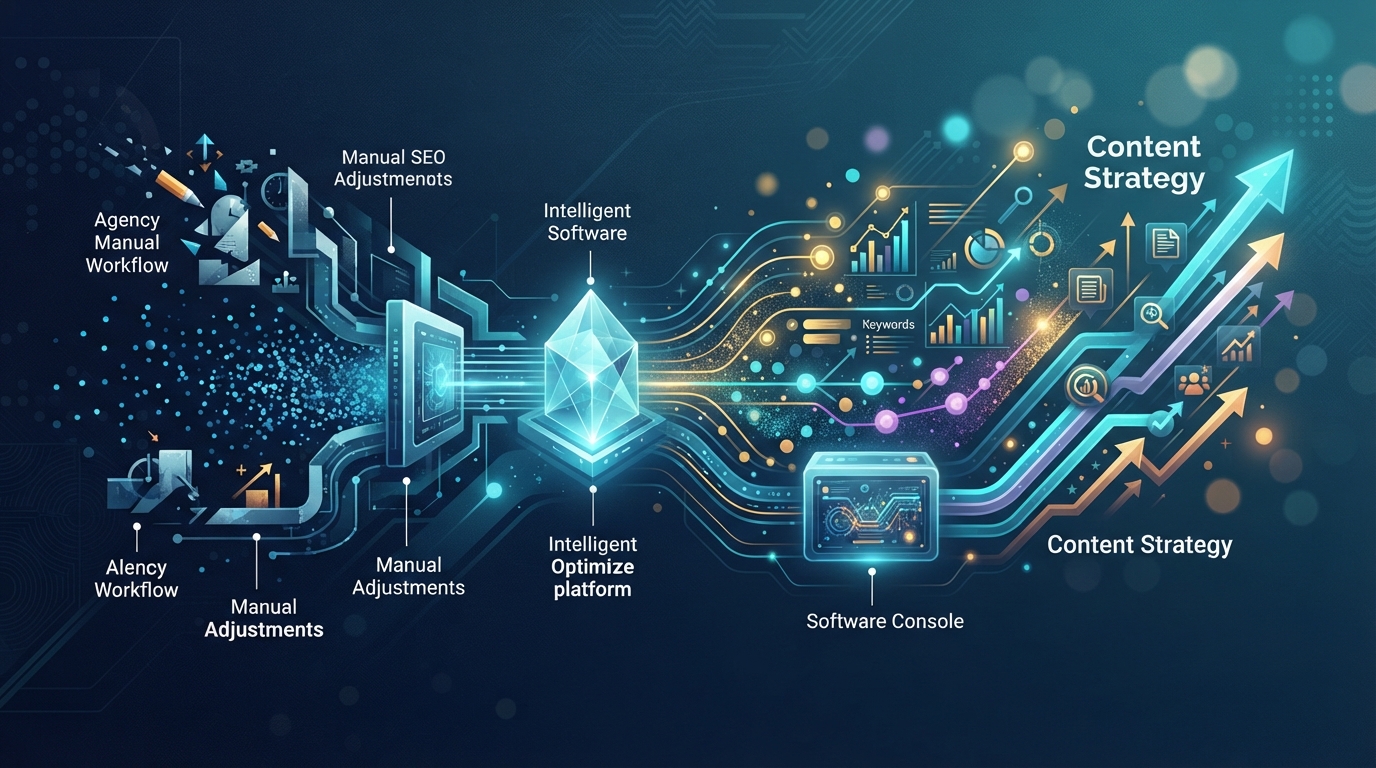
Digital agencies in the United Kingdom are facing a fundamental shift in client expectations. The traditional model of delivering high-volume keyword spreadsheets and rigid, backlink-heavy monthly reports no longer satisfies sophisticated brand partners. Today's clients require precise, actionable content strategies that not only secure visibility on traditional search engine results pages but also ensure prominence within the rapidly expanding ecosystems of generative AI search engines. For agencies to scale sustainably, they require specialised SEO software designed specifically to solve these contemporary content bottlenecks.
To remain competitive, agencies must move away from disjointed, legacy toolkits that isolate technical audits, keyword research, and client reporting into separate silos. Operating across multiple, disconnected platforms increases administrative overhead and limits an agency's ability to provide cohesive, forward-looking insights. By centralising these efforts into an integrated platform, agencies can establish a repeatable framework for content strategy—one that is built for the modern, AI-first search environment.
The Evolution of Agency Content Workflows in the Generative Era
The landscape of organic search has experienced more structural disruption over the past few years than in the preceding decade. With generative search engines synthesising information directly on the results page, the standard metric of tracking simple blue-link keyword rankings is no longer a complete measure of success. Agencies must adapt by shifting their focus from broad search volumes to deeper contextual relevance and brand visibility across a wider variety of digital touchpoints.
This shift demands a new breed of content strategy software. Traditional platforms often rely on historical search database updates that fail to capture real-time intent shifts or the nuances of semantic search. A modern content workflow must analyse how search platforms categorise topic clusters, interpret user intent, and rank conversational answers. Without this capability, agencies risk producing outdated content that misses the target audience entirely.
To thrive in this environment, agency teams need tools that automate the tedious stages of content planning without sacrificing strategic oversight. This means utilising platforms that can instantly identify where a client’s current site lacks depth and automatically construct a step-by-step roadmap to fill those gaps. When software handles the foundational analysis, senior strategists are freed to focus on high-level creative direction and client relationships.
AI-Driven Website Analysis: The Foundation of Modern Agency Audits
Every successful agency engagement begins with a comprehensive audit, yet traditional site audits are notoriously time-consuming. SEO professionals frequently spend hours compiling technical errors, scraping crawl paths, and cross-referencing search console data before they can even begin to formulate a content plan. This manual approach delays the delivery of value and eats directly into agency profit margins.
OneClickGrowth’s AI-driven Website Analysis solves this bottleneck by rapidly scanning a client's digital footprint to map out content gaps and thematic weaknesses. Instead of presenting a generic list of technical errors, the analysis prioritises structural opportunities where new or updated content will have the greatest impact on organic visibility. This ensures that the very first deliverable presented to a client is highly practical and aligned with their core commercial objectives.
Furthermore, automated website analysis allows agencies to scale their pitch processes. By generating rapid, highly detailed assessments of a prospect’s website before the initial discovery call, business development teams can present objective, data-backed strategies that demonstrate immediate expertise. This level of preparation builds rapid trust, shifting the client-agency dynamic from a speculative sales pitch to a collaborative strategic partnership.
Bridging the Gap Between Traditional Search and Generative Engine Optimisation (GEO)
As conversational search models become the primary starting point for consumer queries, standard search engine optimisation is only half the battle. Modern agency SEO software must actively prepare client content for Generative Engine Optimisation (GEO). This involves structuring and optimizing digital assets so they are easily read, synthesised, and cited by large language models and generative answer engines.
GEO requires a fundamental departure from traditional keyword density formulas. AI search models prioritise authoritative, well-structured, and highly specific answers over generic content that merely skims the surface of a topic. Consequently, agencies must design content that explicitly addresses complex, multi-layered queries and provides clear, unambiguous value that AI engines can confidently reference.
Using OneClickGrowth, agencies can seamlessly bridge the gap between traditional search visibility and generative readiness. The platform identifies precise structural enhancements—such as clear semantic markup, schema integration, and concise, answer-focused formatting—that make content highly discoverable for LLMs. By incorporating GEO into their standard service catalogue, agencies can position themselves as forward-thinking leaders who protect and grow client visibility across all search mediums.
Streamlining Content Ideation and Workflow Automation for Multi-Client Portfolios
Managing content development across multiple client portfolios is one of the most significant operational challenges an agency faces. Each client operates in a unique niche, requiring tailored messaging, distinct tone of voice guidelines, and specific industry authority. Keeping track of hundreds of content briefs, writer assignments, and approval stages across several spreadsheets inevitably leads to execution bottlenecks and communication breakdowns.
To maintain high standards without ballooning headcount, agencies must leverage Content Ideation and Workflow Automation. Automated systems can instantly generate granular content briefs based on real-time search trends and verified content gaps. These briefs outline recommended heading structures, semantic target terms, and primary user questions, giving writers a clear roadmap and reducing the need for extensive editorial revisions.
Moreover, centralising this workflow within a dedicated platform ensures that agency account managers have complete visibility over every piece of content in production. Real-time tracking of creation, editing, and publishing stages prevents projects from slipping through the cracks, allowing agencies to deliver consistent, high-quality content schedules month after month, even as their client roster grows.
Centralising Client Operations with Agency Partner Management Dashboards
Transparent, professional communication is the cornerstone of client retention. However, compile-on-demand reporting and manual monthly slide decks often become a significant drain on agency resources. Account managers can easily spend several days each month pulling metrics from disparate analytics platforms, formatting charts, and drafting executive summaries.
OneClickGrowth’s Agency Partner Management Dashboards simplify this process by centralising all critical performance metrics into a clean, client-facing interface. These dashboards provide real-time updates on campaign progress, content production milestones, and visibility metrics across traditional and generative search platforms. By giving clients direct access to their project's trajectory, agencies foster an environment of transparency and trust.
Beyond client transparency, these centralized dashboards act as internal operations hubs for agency leadership. Directors can monitor campaign performance across the entire portfolio at a glance, allowing them to allocate creative and analytical resources where they are most needed. This macro-level view is essential for maintaining operational efficiency and ensuring that all accounts remain on track to meet their key performance indicators (KPIs).
Actionable Content Strategy Planning: Moving from Data to Execution
The ultimate goal of any agency SEO software is not merely to compile data, but to translate that data into a coherent, executable strategy. Many legacy platforms provide overwhelming mountains of search data but leave the agency to figure out how to structure it into a logical timeline. Without a clear execution framework, strategic recommendations can easily stall in the pre-production phase.
Effective Content Strategy Planning involves taking insights from website analyses and automated gap assessments and transforming them into a step-by-step growth plan. This plan should prioritise high-impact, low-difficulty content opportunities first, allowing the client to experience quick wins that justify their ongoing investment. The software should make it simple to organise these opportunities into intuitive campaign phases.
When a strategy is structured into an actionable, sequential plan, it becomes significantly easier to gain client buy-in. Clients can clearly see the logical progression of their investment, understanding exactly why certain topics are being prioritised and how each phase of content creation builds upon the last. This structured approach minimises scope creep and keeps both the agency team and the client aligned on the same long-term objectives.
Quantifying the Return on Investment for Agency-Led Content Initiatives
In an era of tight marketing budgets, proving the direct financial impact of content campaigns is non-negotiable. Agencies must be able to demonstrate how their strategic interventions translate into tangible business growth, whether that is measured in increased organic traffic, higher lead conversion rates, or enhanced brand authority within generative search summaries.
To do this effectively, agencies must track a balanced mix of leading and lagging indicators. Leading indicators, such as crawl efficiency, content production velocity, and initial semantic keyword indexing, show that the strategy is moving in the right direction. Lagging indicators, such as sustained organic impressions, conversions, and citations in generative search answers, provide the ultimate proof of campaign success.
Using integrated reporting features, agencies can easily correlate content publication dates with subsequent shifts in search visibility and traffic. This clear, visual connection makes it straightforward to demonstrate to stakeholders that content is not merely an ongoing expense, but a high-yielding, long-term digital asset that continues to attract and convert prospects long after its initial publication.
Driving Sustainable Agency Scalability with OneClickGrowth
Ultimately, the agencies that succeed in the coming years will be those that embrace intelligent automation to deliver superior results with greater operational efficiency. Relying on legacy tools and manual administrative processes limits an agency’s capacity to take on new business and compromises the quality of service provided to existing clients.
OneClickGrowth provides the complete operational engine that modern agencies need to thrive. By combining AI-driven Website Analysis, Generative Engine Optimisation insights, automated content planning, and dedicated agency dashboards, our platform empowers your team to deliver world-class content strategies at scale. It allows you to move away from administrative overhead and focus on what your agency does best: delivering exceptional creative strategy and driving measurable growth for your clients.
Frequently Asked Questions
How does OneClickGrowth assist agencies with client reporting?
OneClickGrowth provides dedicated Agency Partner Management Dashboards that centralise performance metrics, project milestones, and content production stages. These real-time dashboards eliminate the need for manual, time-consuming monthly reports, allowing clients to view their search visibility and campaign progress transparently at any time.
What is Generative Engine Optimisation (GEO), and why is it important for agencies?
GEO is the process of structuring and refining digital content so it is easily understood, indexed, and cited by AI-driven search models and LLMs. As traditional search engines increasingly incorporate generative summaries, agencies must optimise client content for GEO to ensure their clients remain visible in these AI-generated answers.
Can this software handle content ideation for multiple distinct niches?
Yes. OneClickGrowth’s Content Ideation and Workflow Automation tools analyse specific client domains, identify unique industry content gaps, and generate highly targeted content briefs tailored to any niche. This allows agency teams to maintain strict quality standards and industry-specific authority across a diverse client portfolio.
How does the AI-driven Website Analysis save billable hours?
Instead of requiring hours of manual scraping and data consolidation, our AI-driven Website Analysis quickly scans a client’s digital presence to identify critical structural gaps and priority content opportunities. This automates the discovery phase, allowing your team to instantly build actionable strategies and present value to clients much faster.